
Images of Transience
The term vanitas derives from Latin and means transience, emptiness, or futility. Its art historical significance stems from the biblical phrase vanitas vanitatum (“vanity of vanities”) and serves as a reminder that beauty, wealth, power, and even human knowledge are fleeting. Closely related is the concept of memento mori, the invitation to remain mindful of our own mortality.
Vanitas emerged as an independent pictorial genre primarily in Dutch painting of the sixteenth and seventeenth centuries. Skulls, hourglasses, withering flowers, extinguished candles, and overripe fruit became symbols of life’s impermanence. They remind us that everything earthly is subject to change and that every moment is of limited duration.
Yet Vanitas paintings were never merely representations of death. Their beauty is precisely what gives their message such emotional force. Painting celebrates light, colour, and material richness while simultaneously revealing their transience. Between seduction and reflection, a field of tension emerges that continues to fascinate artists today.
The subject has lost none of its relevance in contemporary art. Questions of identity, corporeality, memory, and transformation have given Vanitas renewed significance. Today, transience is understood not only as an ending, but increasingly as a process of change and transformation.
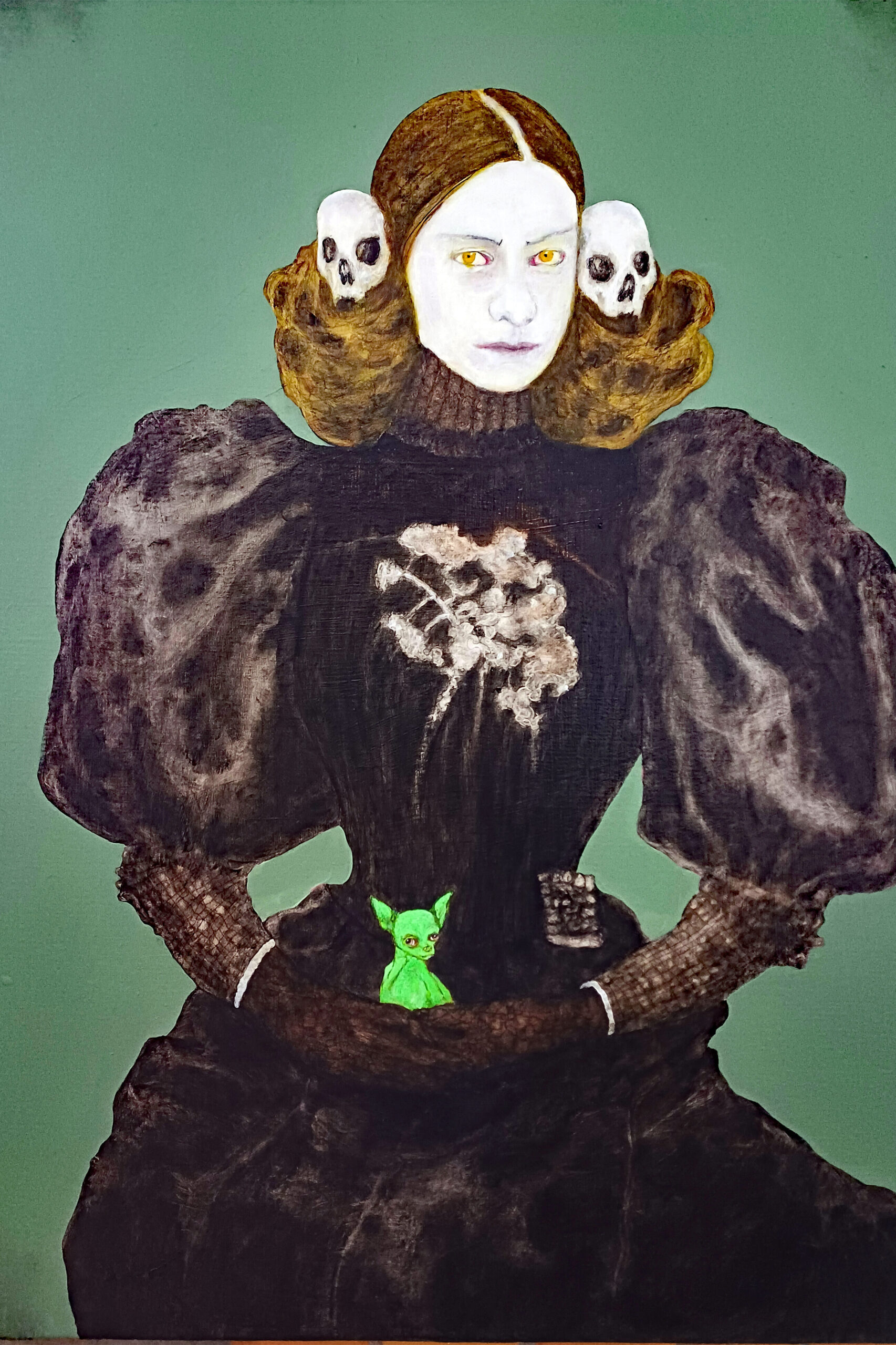
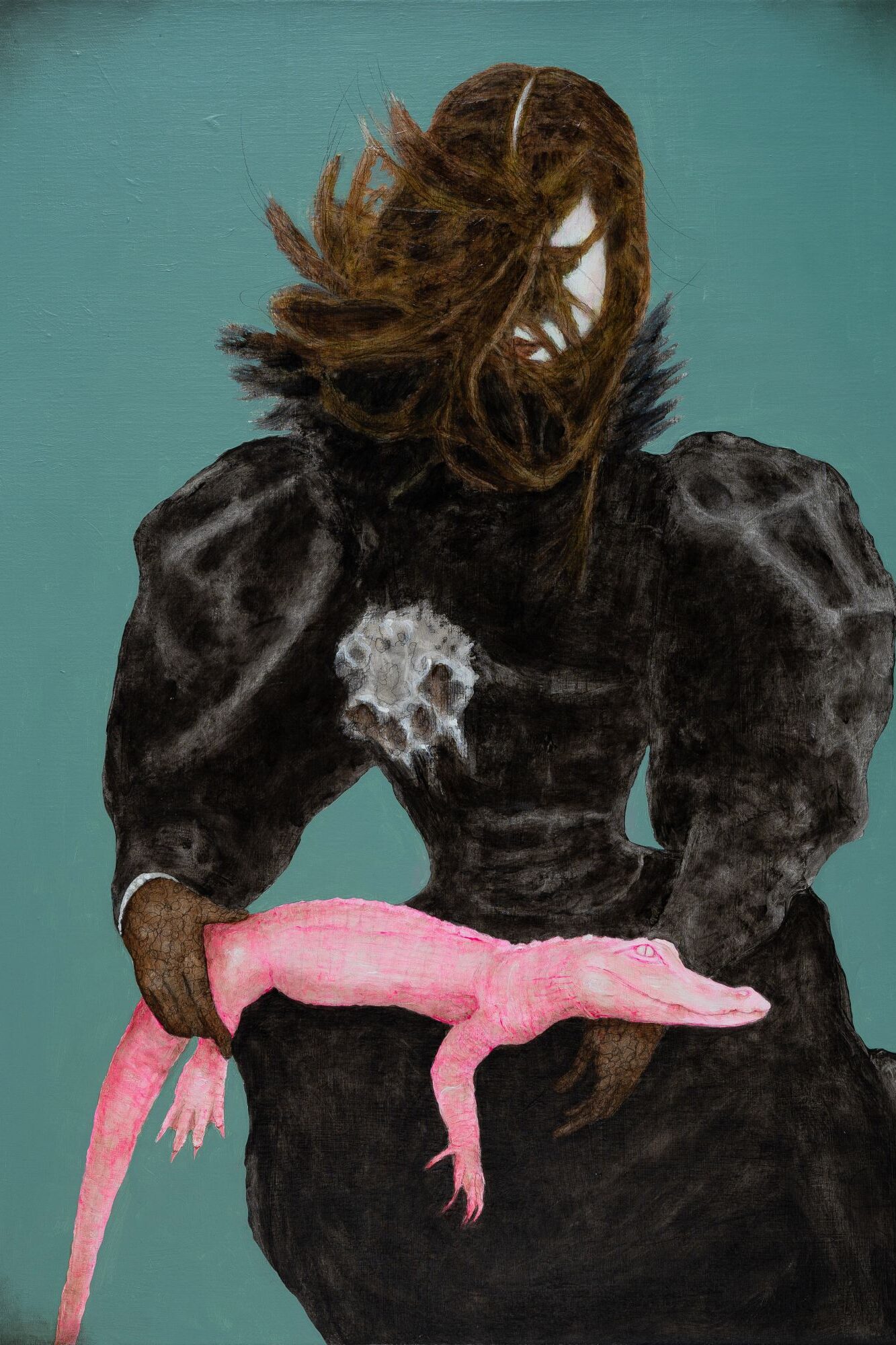
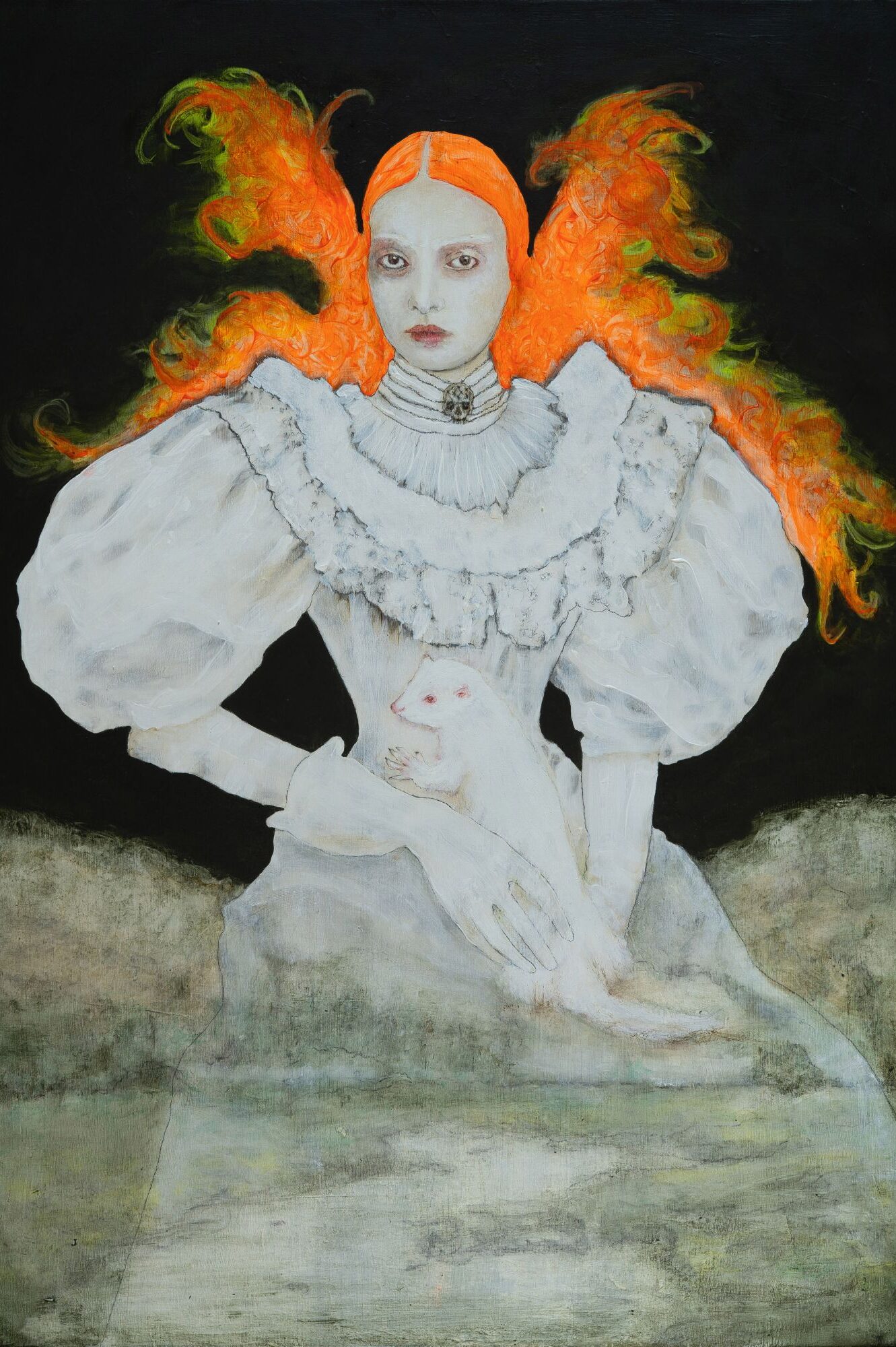
Marie Louise Elshout draws upon this centuries old tradition while carrying it decisively into the present. In place of classical Vanitas symbols, she introduces enigmatic figures whose appearance resists clear classification. Human and animal, myth and reality, beauty and melancholy merge into a visual language that feels both timeless and unmistakably contemporary.
Here, transience is not presented as irrevocable loss, but as the very condition for transformation. It is this openness that gives her paintings their quiet intensity. They do not speak of the end of life, but of its continual capacity for renewal.
In Marie Louise Elshout’s work, Vanitas becomes a contemporary reflection on identity and transformation. Her paintings remind us that nothing remains unchanged and that within impermanence itself lies the possibility of new beginnings.
The works presented here reveal different facets of Marie Louise Elshout’s engagement with the theme of Vanitas. Together they create a visual dialogue in which art historical tradition and contemporary painting meet in a compelling and meaningful exchange.
