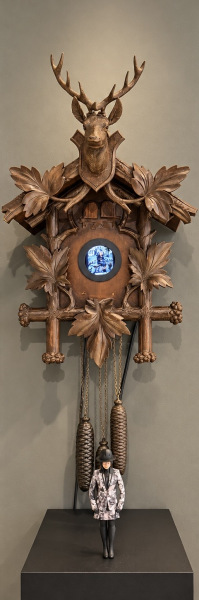
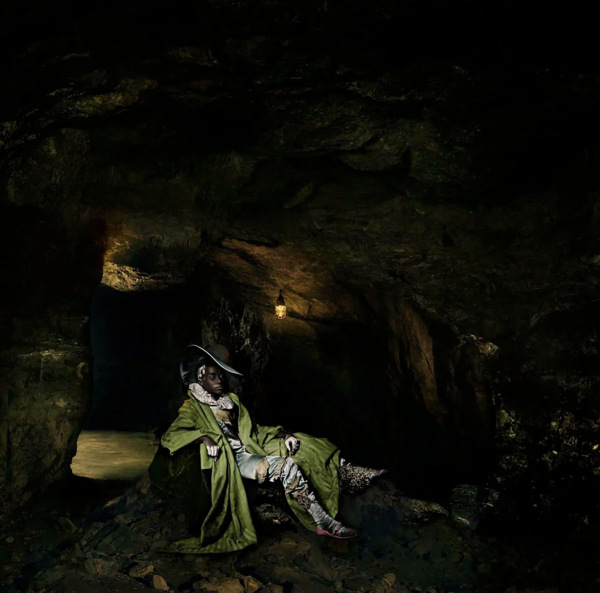
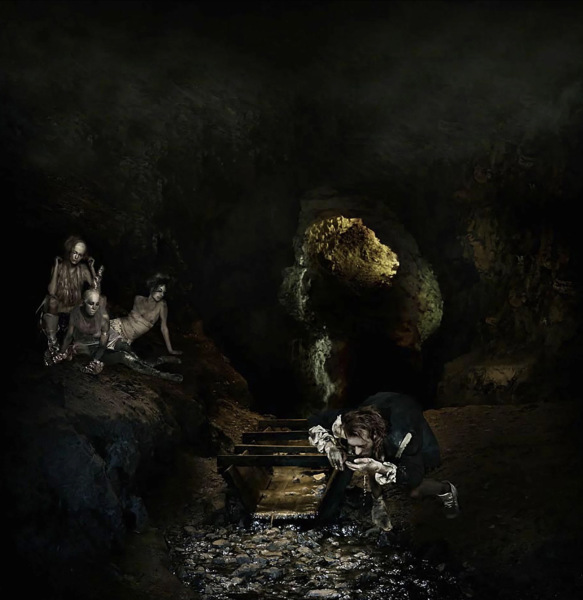
A worn-out soccer ball, a stag, pigeons, and allotment gardens: Tina Winkhaus draws upon images that seem familiar to us and alters the way we view them. In HM4T 4 EVR (Heimat Forever), her photographically composed visual worlds encounter sculptural and audiovisual works. The project explores memories, cultural influences, and the question of what gives us a sense of home.
opening: 21 October 2026, 7 pm
exhibition: 23 October 2026 – 6 February 2027, janinebeangallery, Torstrasse 154 Berlin, Tue – Sat 12 – 6
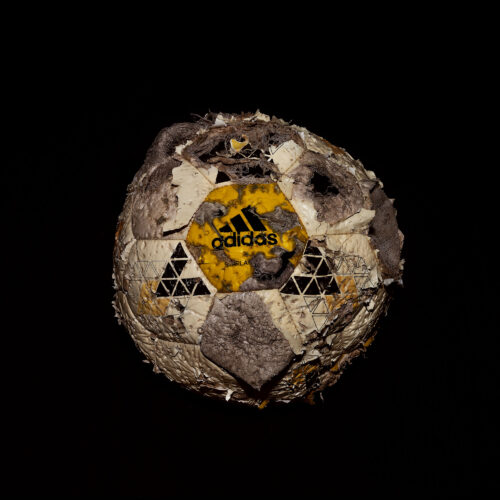
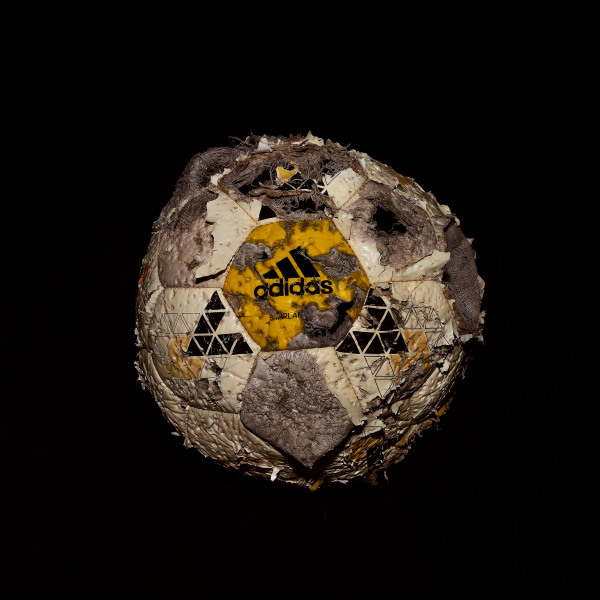
A football lies against a dark background. Its surface is torn open, parts of its outer skin are missing; the material appears brittle, abraded, worn. The ball is so badly damaged that it can no longer be used for play.
And yet it remains immediately recognisable for what it is.
Few objects bring together as many personal and collective memories across the world as the football. Across countries, generations and social environments, it creates shared experiences that extend far beyond the sport itself. It belongs to everyday life as much as to social ritual, linking individual biographies with collective events and becoming deeply embedded in our cultural memory as an image.
In Tina Winkhaus’ Football from 2026, the ball is at rest. The movement has ended, while the traces of its use remain visible.
Community and play meet transience and the marks of what has taken place. With the words “lived, loved”, Winkhaus describes the relationship many people have with football.
From this image, the conceptual sphere of HM4T 4 EVR begins to unfold. The title itself contains a tension. Its abbreviated, coded spelling encounters a term that promises permanence: Heimat forever. At the same time, Heimat arises from things, people, landscapes, habits and experiences that are subject to change.
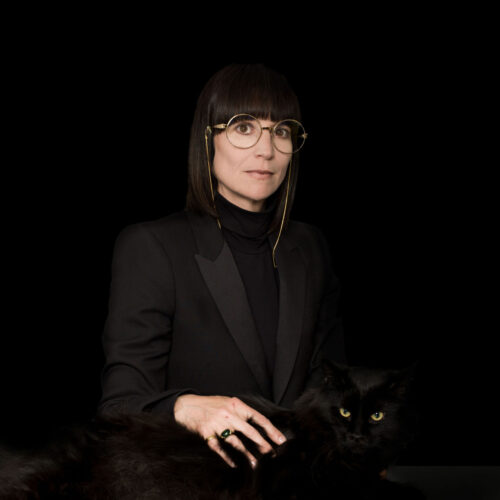
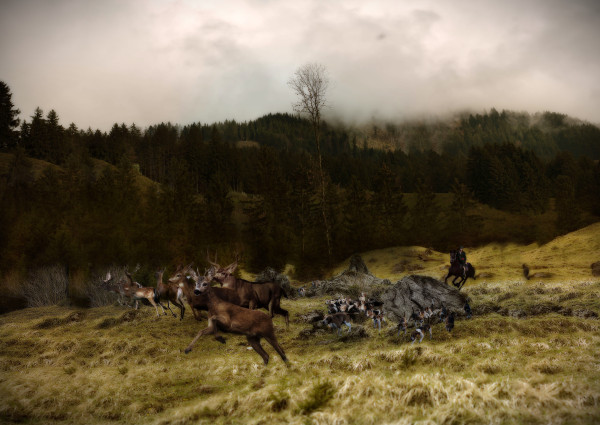
For Winkhaus, Heimat is closely connected to cultural experience. Born in Essen in 1966, she studied photography in Munich, lived for several years in New York and London, and has been based in Berlin since 1999. Origins and the distance created by changes of place coexist within her biography. In HM4T 4 EVR, she approaches the subject through familiar, at times stereotypical images and objects: football, forest, hunting, deer, allotment gardens and pigeons. She herself refers to these motifs as “German attributes.”
Their familiarity turns them into symbols and clichés, while at the same time they carry individual experiences and collectively shared ideas. It is precisely these overlapping layers that interest Winkhaus, because what appears familiar does not possess an immutable meaning.
In this respect, HM4T 4 EVR touches upon a question that has acquired particular urgency within the current politically polarised climate: How can we speak about Heimat, origins and cultural belonging without immediately being assigned to a political position? Winkhaus is concerned with the experience that the concept of Heimat is increasingly being appropriated by political forces and associated with exclusionary ideas. The exhibition proposes a more open space of experience. Heimat can encompass memory, language, culture and landscape, as well as change, contradiction and historical responsibility.
The forest carries these reflections into a cultural realm of imagery that has been associated with ideas of origin and identity for centuries. It has been part of Winkhaus’ repertoire for many years and at the same time occupies a particular place in German cultural history. Romanticism and fairy tales, a longing for nature and childhood have become inscribed within it, alongside strangeness, trial and danger.
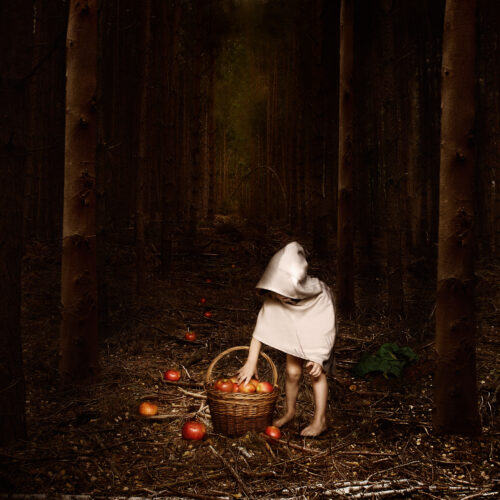
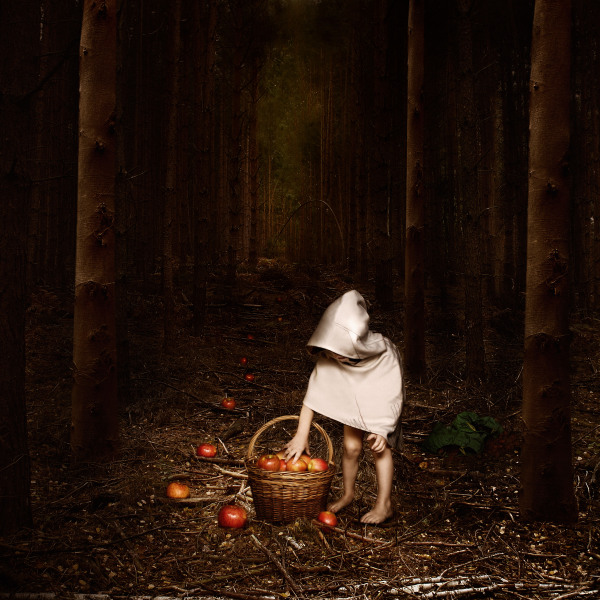
In The Boy with the Apple Banquet from 2014, a boy wearing a white cape moves through a forest. Red apples lie on the ground behind him, forming a trail. The scene recalls Hansel and Gretel, although apples have taken the place of breadcrumbs. This opens up another layer. The apple carries a long cultural and visual history, ranging from knowledge and temptation to fairy tales and everyday experiences of nature. Winkhaus allows these associations to coexist. The image recalls familiar narratives without allowing itself to be fixed to any single one of them.
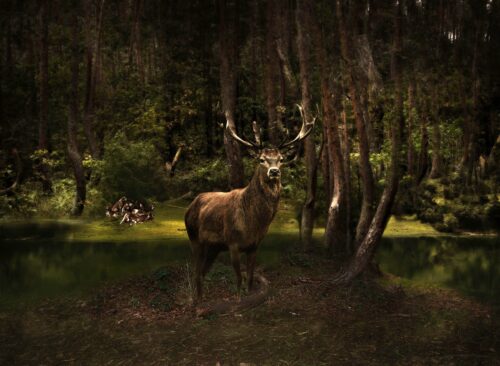
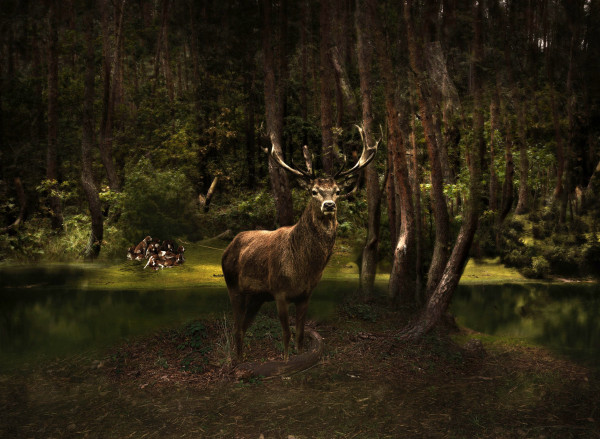
Animals, too, recur throughout her work. In Red Deer from 2026, ideas of nature and hunting, vulnerability and strength converge. The stag carries with it a long history of cultural attribution: an image of nature and a hunting motif, dignity and trophy, Romantic ideal and popular image. Winkhaus is interested in which of these ideas we continue to see when encountering an apparently familiar motif.
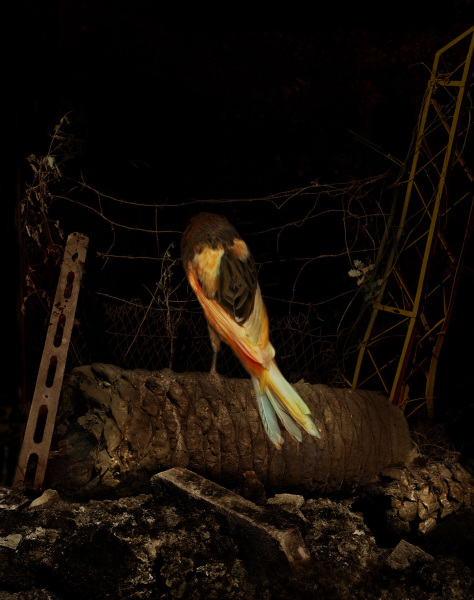
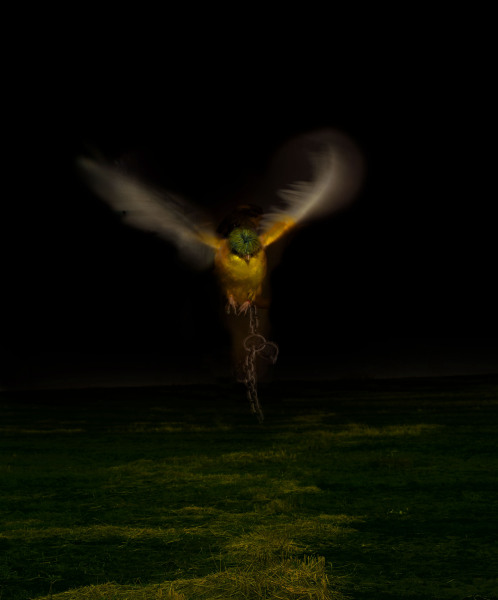
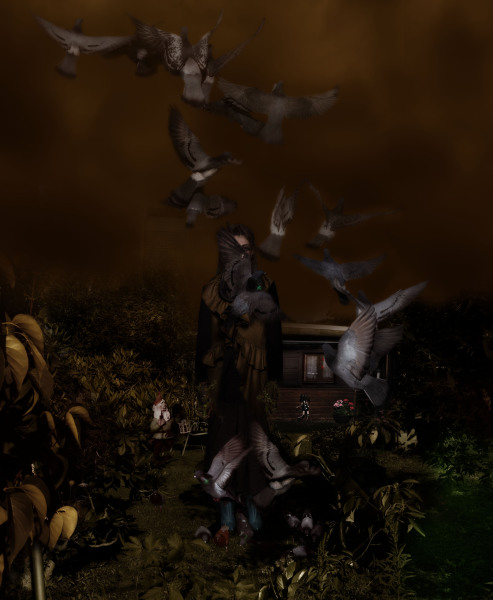
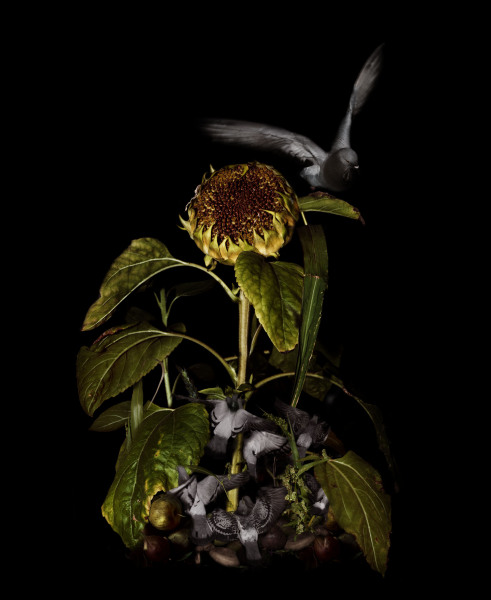
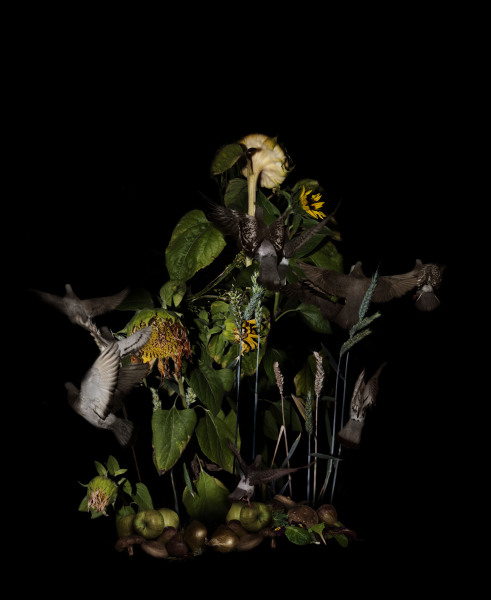
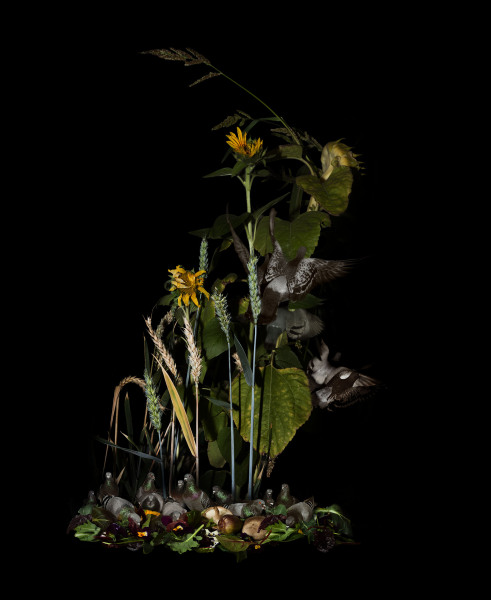
The mutability of such attributions becomes particularly apparent in the pigeon. Once a valuable breeding and status animal, a carrier pigeon, religious symbol and emblem of peace, it has since become an ordinary presence in urban life and, in many places, one of the most disparaged city animals. The creature itself has barely changed; its cultural evaluation has changed considerably.
The pigeon reveals the extent to which perception is shaped by social conditions. What was once precious can become commonplace. Admiration can turn into disdain. The subject remains while the way we look at it changes.
Similar tensions are carried by the other motifs in HM4T 4 EVR.
The allotment garden combines ideas of retreat, order and private idyll with a particular culture of everyday life and leisure.
The forest is both landscape and cultural image-space.
The football remains an object of play while also becoming a communal ritual and global phenomenon.
Precisely because these things appear so self-evident, Winkhaus can make them visible again through subtle shifts.
This principle finds its counterpart in her working method.
Winkhaus’ digital works are created from an extensive body of self-produced visual material. She takes countless photographs for her image worlds. Figures, animals, plants, objects, spaces and the smallest details are photographed individually, isolated and digitally assembled into a single work. A scene that appears coherent is composed of fragments photographed at different times and in different places.
From this material, Winkhaus develops an autonomous pictorial reality. She rearranges the individual elements, determines their relationships to one another and shapes spatial relationships, light and atmosphere within the composition. The finished works are Digital Art. Terms such as Constructed Reality and Photographic Painting describe the relationship between photographic source material and digital image construction. Winkhaus herself also uses the term Analog AI.
The term Analog AI acquires particular resonance at a time when generative artificial intelligence can produce, within moments, images that have never been photographed. Winkhaus, too, constructs scenes that have never existed in this form. Yet every detail derives from a specific photograph and an artistic decision. Experience, intuition, memory and a personal image archive built up over many years shape these works.
It is precisely at this point that the artistic process and the subject of HM4T 4 EVR begin to converge.
Memory, too, is composed of fragments. Some situations remain precise, while others lose their contours. Personal experiences connect with stories, inherited images and ideas absorbed from art, film, literature or everyday life. What we remember is continually reassembled from the perspective of the present.
Heimat can likewise be understood as such a layering. It arises from real places and people, from language, habits and personal experiences, while also taking shape through images and cultural narratives. A football can acquire meaning within it just as much as a forest, a garden or an animal. These individual elements carry different weights, change over the course of a life and can nevertheless combine to create a sense of belonging.
In this respect, the construction of Winkhaus’ image worlds corresponds with the subject of her exhibition.
From many individual fragments, a reality emerges that did not previously exist in this form and yet can appear familiar to us. Heimat becomes visible less as a fixed image than as something continually composed from experience, memory and cultural transmission.
In the end, this idea leads back to the football.
Its surface is damaged, its original function lost. Its form nevertheless remains recognisable. What has happened to it cannot be undone and has become part of its appearance.
Perhaps this contains one of the most precise notions of Heimat developed by HM4T 4 EVR: its meaning does not depend upon remaining intact or unchanged. It can carry history and transformation within itself and still create a sense of connection.
Lived, loved.